SLA 3D printing:
stereolithography and DLP.
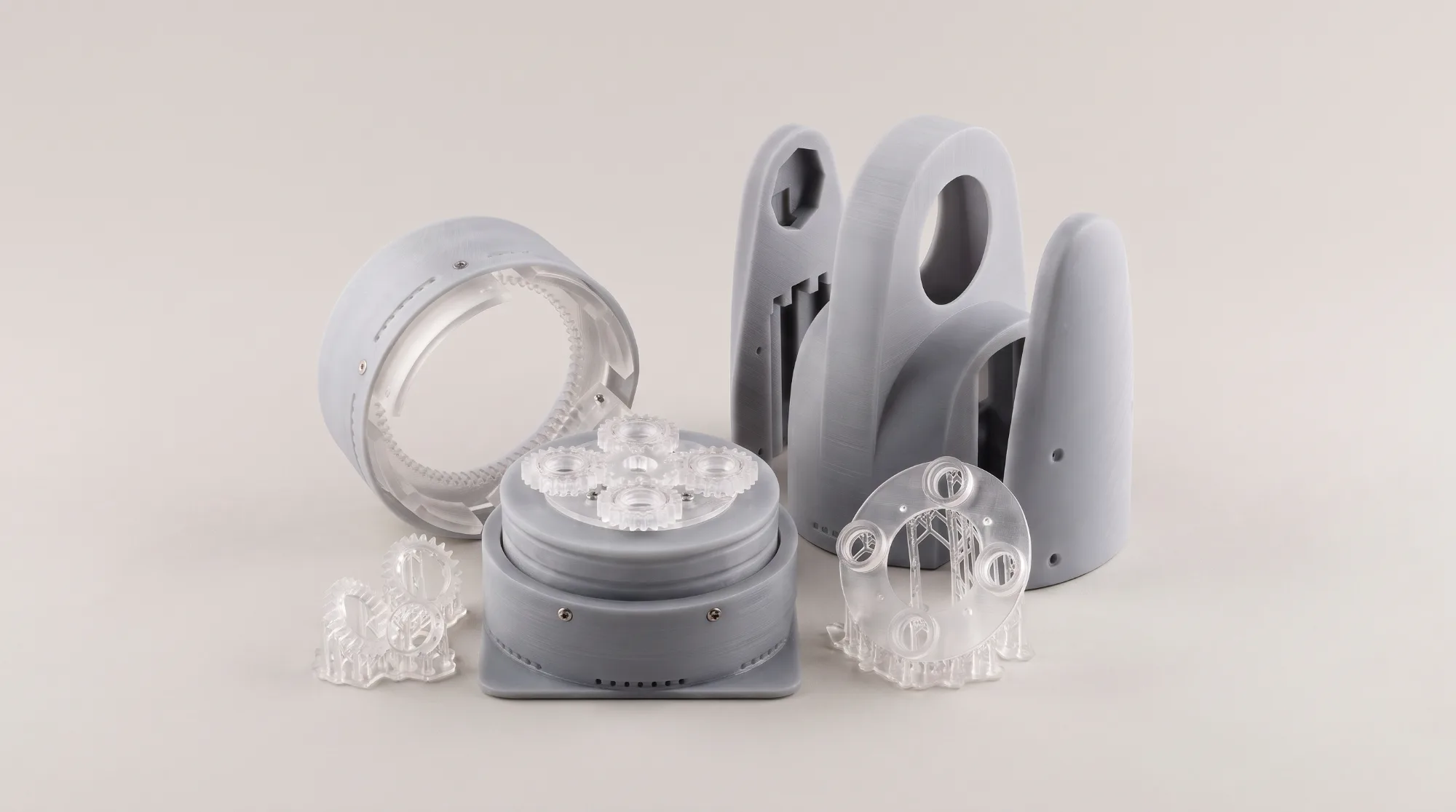
Resin parts made by SLA 3D printing, from a single piece: smooth surfaces, details from 0.15 mm and delivery in 7–10 working days. Upload your CAD file and the price appears in seconds.
- Lead time 7–10 working days
- Layer thickness 0.05–0.1 mm
- Tolerance ±0.1–0.3%
- Build volume up to 1700 × 900 × 800 mm






How stereolithography works.
SLA, or stereolithography, is a 3D printing process in which a UV laser cures liquid resin (photopolymer) layer by layer. Layers are 0.05–0.1 mm thin, which produces smooth surfaces and details from 0.15 mm. DLP works on the same principle but exposes each entire layer at once with a projector, reaching details from 0.1 mm.
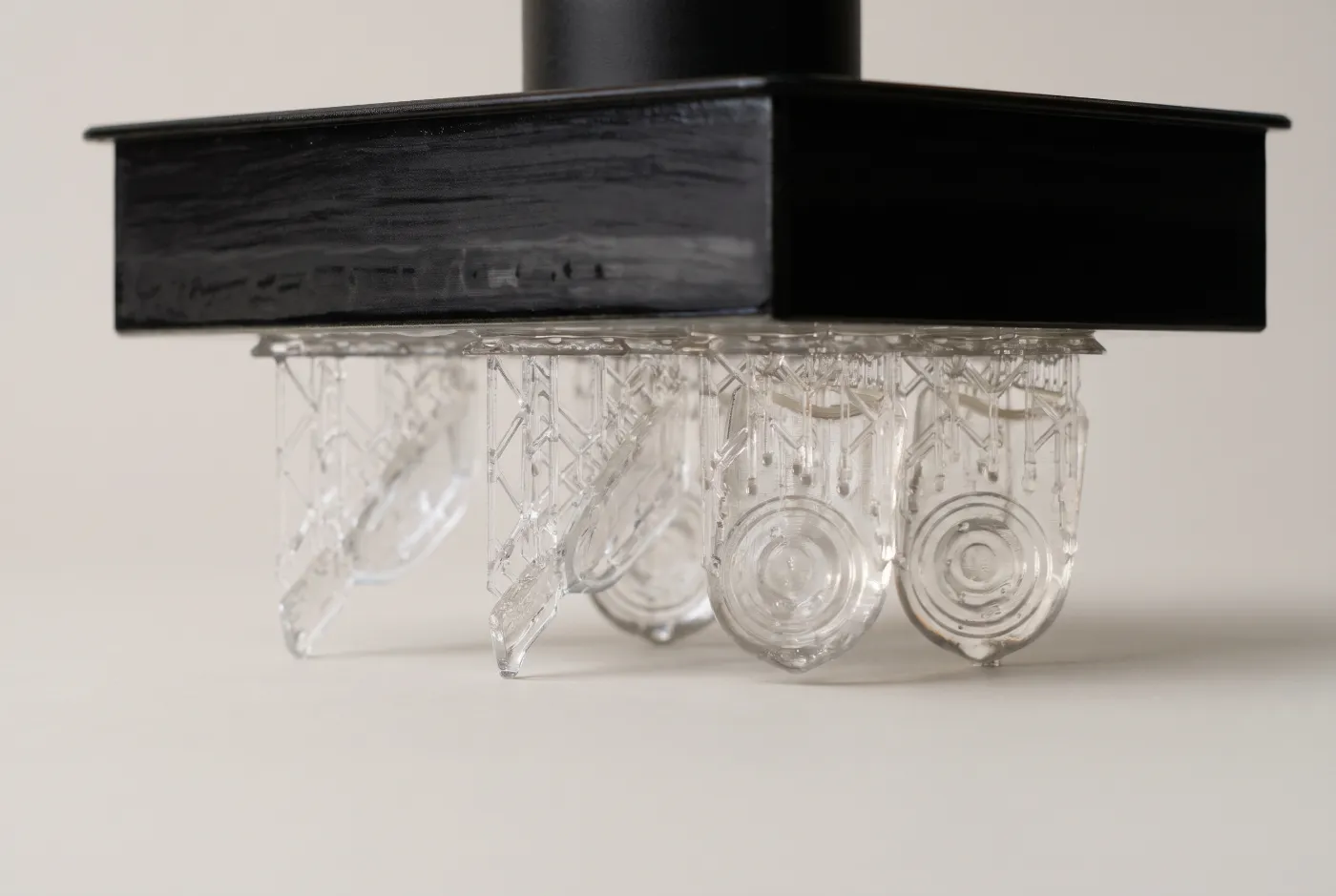
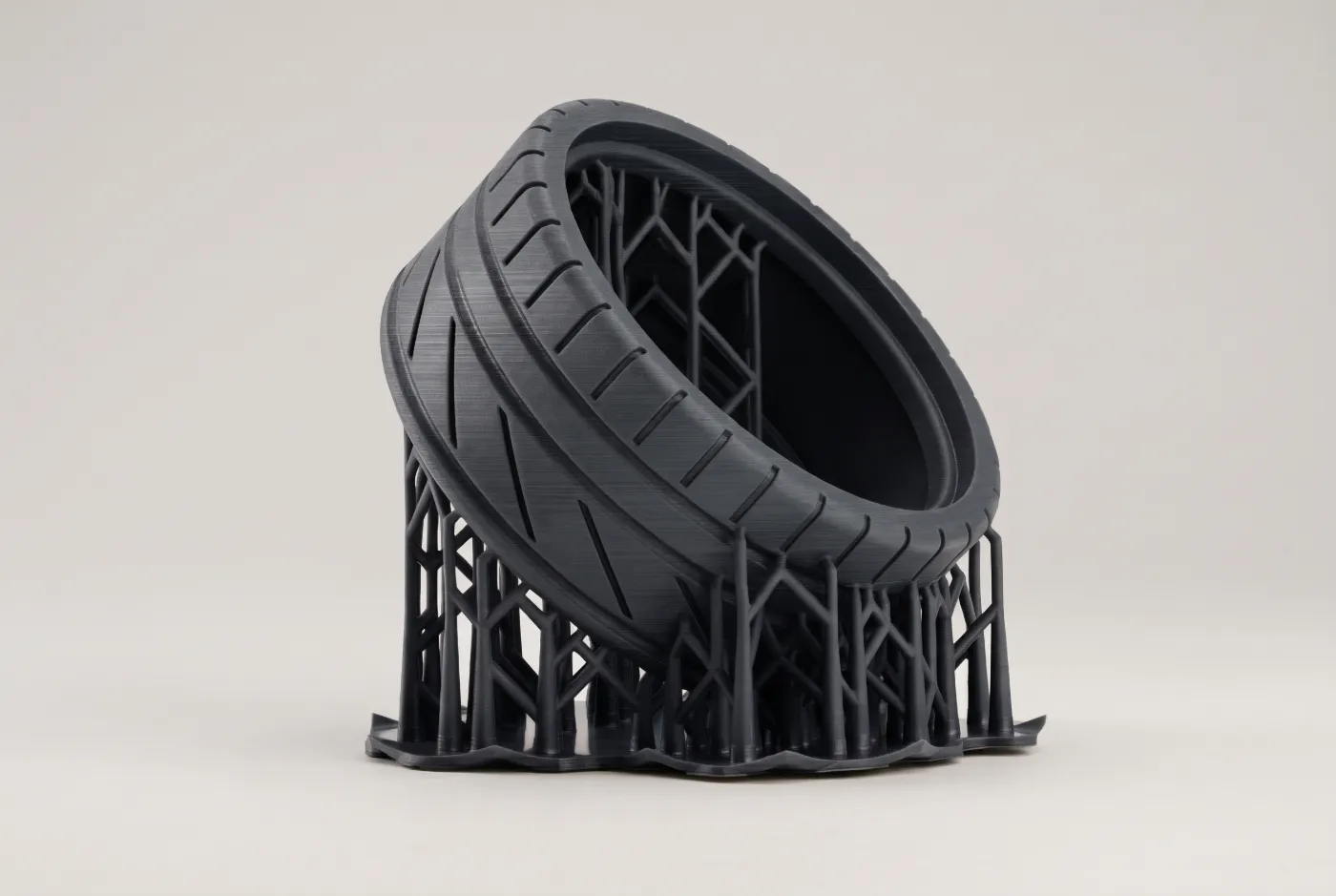
The laser traces the cross-section of the part into a thin layer of resin; wherever it hits, the resin solidifies. The build platform then moves by one layer thickness and the next layer follows. Depending on the machine, the part is lowered into the resin vat from above or hangs upside down from the platform. Because the resin is liquid, every part needs support structures that hold it in place and are removed after printing.
After printing, the part is washed in solvent, separated from its supports and post-cured under UV light; only then is the resin fully cured. Layer lines are not visible in most cases. The process is also known as resin 3D printing or simply SLA printing.
SLA and DLP resins.
Four resins, from smooth appearance models to micro parts. Each material page lists the datasheet and all design limits.
All materials in the Material FinderStandard Resin
White or black; white can also be painted in Pantone colours. For appearance models, design prototypes and master patterns for vacuum casting. Tolerance ±0.2%, parts up to 1700 × 900 × 800 mm.Transparent Resin
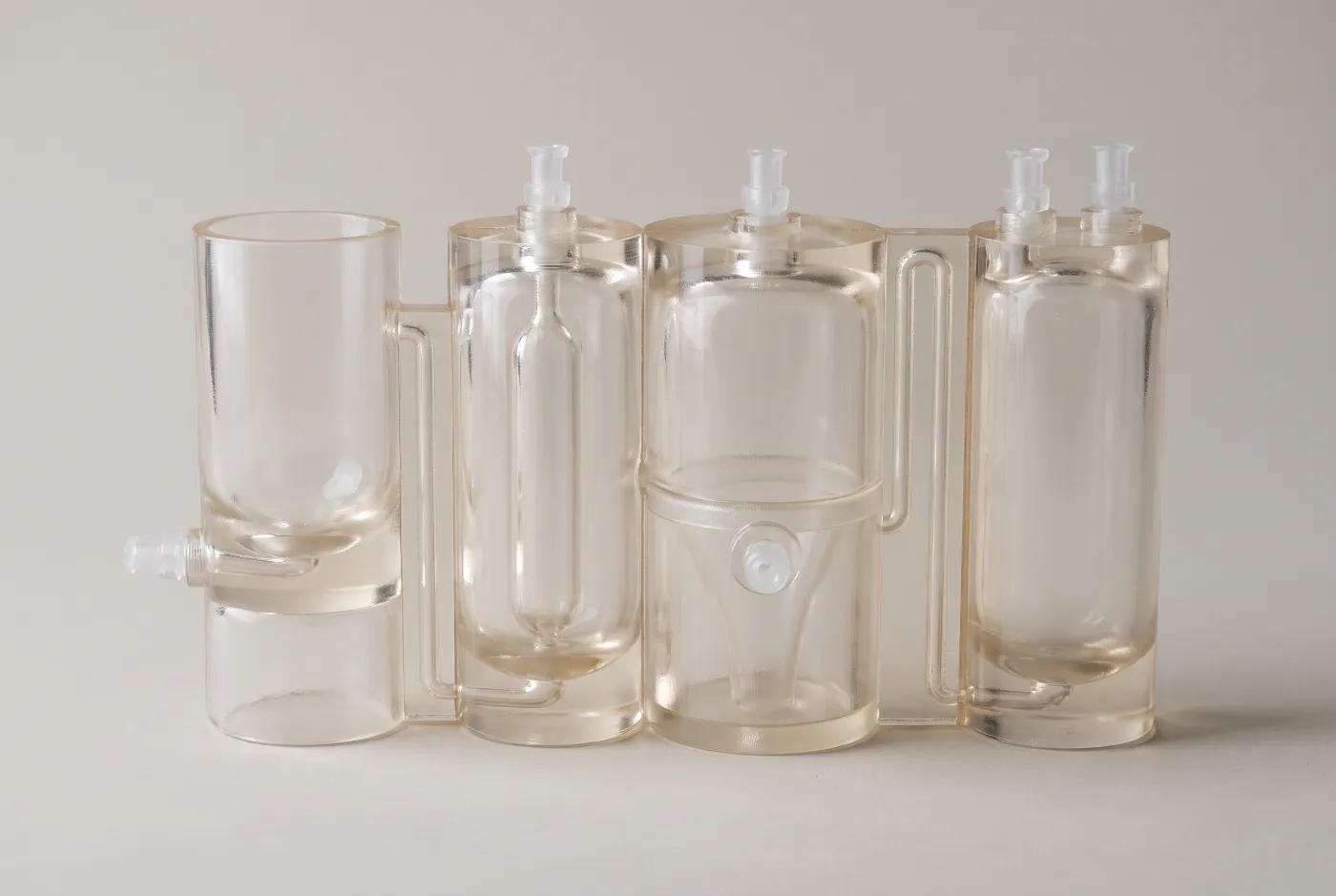
Clear resin, polished as standard. For light guides, sight glasses and flow models with visible flow. Tolerance ±0.3%, parts up to 600 × 600 × 450 mm.Tough Resin (green)
Tougher resin for functional tests such as clips, snap fits and fit checks. Tensile strength 62.4 MPa, tolerance ±0.1%, parts up to 145 × 145 × 175 mm.DLP Ultra Detail Resin RC31
The finest resin in the range, orange. Details from 0.1 mm, tolerance ±0.05%, parts up to 192 × 120 × 200 mm. For micro parts, jewellery and dental models. Lead time on request.
Technical data for SLA 3D printing.
Guide values for the four resins. The values for your material are on its material page and in the datasheet.
Process
SLA with UV laser, DLP with UV projector; the material is liquid photopolymer resinLayer thickness
0.05–0.1 mm, Standard Resin 0.1 mm; Tough Resin and DLP also 0.025 mmTolerance
±0.1% (Tough Resin), ±0.2% (Standard Resin), ±0.3% (Transparent Resin), ±0.05% with DLPFinest details
0.4 mm (Standard Resin), 0.15 mm (Tough Resin), 0.1 mm (DLP)Build volume
Up to 1700 × 900 × 800 mm (Standard Resin), 600 × 600 × 450 mm (Transparent Resin), 145 × 145 × 175 mm (Tough Resin), 192 × 120 × 200 mm (DLP)Heat deflection temperature
49–56 °C (HDT at 0.45 MPa), depending on resinLead time
7–10 working days, DLP on request
Mechanical properties are typical manufacturer values, not guaranteed properties; orientation and layer thickness affect the finished part.
Information as of: November 2026
Applications for SLA parts.
SLA pays off where surface finish, fine detail or transparency matter and the part is neither hot nor under constant load.
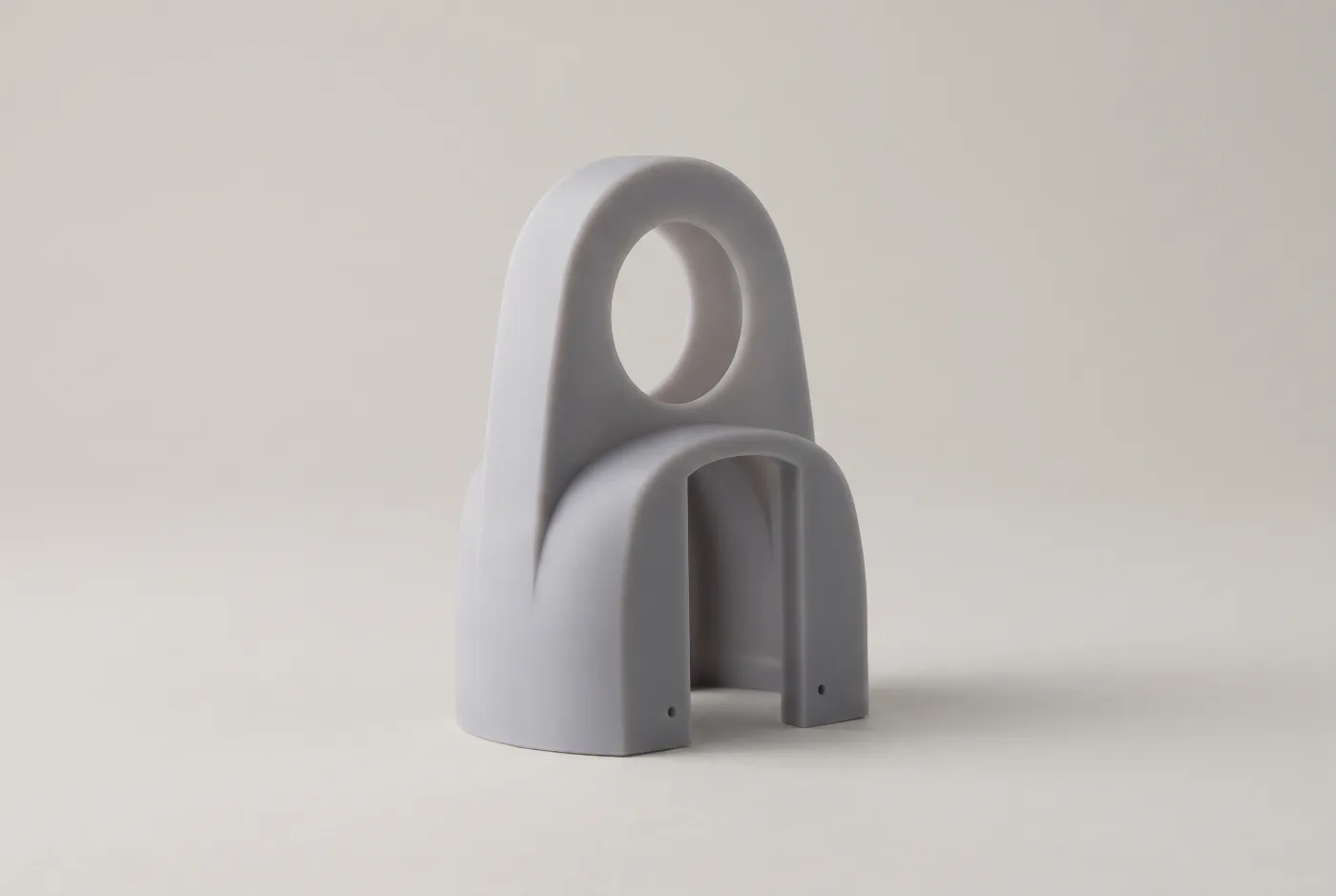
Appearance and design models
Housings, control elements and trade fair models with a smooth surface that can be painted.Prototypes before injection moulding
Check shape, feel and assembly before the tool is built.Master patterns for vacuum casting
Smooth master models for silicone moulds; the mould reproduces every flaw in the model.Transparent parts
Light guides, covers and flow models in which the flow is visible.Fit and function tests
Clips, snap fits and fit checks in Tough Resin with ±0.1% tolerance.Micro parts with DLP
Connector prototypes, dental and jewellery models with details from 0.1 mm.
SLA compared with SLS, MJF and FDM.
Surface, load and heat usually decide the process. Guide values for the common materials.
| Criterion | SLS | MJF | SLA | FDM |
|---|---|---|---|---|
| Principle | Laser sinters plastic powder | Infrared fuses the whole powder layer | UV light cures liquid resin | Nozzle deposits molten plastic |
| Materials | PA12, PA12-GF, TPU 88A | PA12 | Standard, clear and tough resin, DLP | Eleven, from PLA to PEEK |
| Surface | Matte, slightly grainy | Matte, fine-grained, slightly smoother | Smooth, layers barely visible | Visible layer lines |
| Accuracy | ±0.3% | ±0.3% | ±0.1–0.3%, DLP ±0.05% | ±0.2 mm to ±0.3% |
| Layer thickness | 0.1 mm | 0.08 mm | 0.05–0.1 mm | 0.1–0.25 mm |
| Strength | Tough, similar in all directions | Tough, similar in all directions | Stiff, standard resin rather brittle | Lower across the layers |
| Support structures | None, the powder supports | None, the powder supports | Always, contact points visible | On overhangs from about 45° |
| Largest parts | 700 × 380 × 580 mm | 284 × 350 × 350 mm | 1700 × 900 × 800 mm | 800 × 800 × 800 mm |
| Lead time | PA12 dark grey 2–5, otherwise 5–10 working days | 7–10 working days | 7–10 working days, DLP on request | 2–5 working days, PEEK 7–10 |
| Typical parts | Functional parts, clips, complex housings | Series parts, housings, brackets | Visual models, fine parts, clear parts | Fixtures, brackets, large prototypes |
| Cost | Medium | Medium, lower in series | Medium | Low (PLA, PETG) to high (PEEK) |
Principle
- SLS
- Laser sinters plastic powder
- MJF
- Infrared fuses the whole powder layer
- SLA
- UV light cures liquid resin
- FDM
- Nozzle deposits molten plastic
Materials
- SLS
- PA12, PA12-GF, TPU 88A
- MJF
- PA12
- SLA
- Standard, clear and tough resin, DLP
- FDM
- Eleven, from PLA to PEEK
Surface
- SLS
- Matte, slightly grainy
- MJF
- Matte, fine-grained, slightly smoother
- SLA
- Smooth, layers barely visible
- FDM
- Visible layer lines
Accuracy
- SLS
- ±0.3%
- MJF
- ±0.3%
- SLA
- ±0.1–0.3%, DLP ±0.05%
- FDM
- ±0.2 mm to ±0.3%
Layer thickness
- SLS
- 0.1 mm
- MJF
- 0.08 mm
- SLA
- 0.05–0.1 mm
- FDM
- 0.1–0.25 mm
Strength
- SLS
- Tough, similar in all directions
- MJF
- Tough, similar in all directions
- SLA
- Stiff, standard resin rather brittle
- FDM
- Lower across the layers
Support structures
- SLS
- None, the powder supports
- MJF
- None, the powder supports
- SLA
- Always, contact points visible
- FDM
- On overhangs from about 45°
Largest parts
- SLS
- 700 × 380 × 580 mm
- MJF
- 284 × 350 × 350 mm
- SLA
- 1700 × 900 × 800 mm
- FDM
- 800 × 800 × 800 mm
Lead time
- SLS
- PA12 dark grey 2–5, otherwise 5–10 working days
- MJF
- 7–10 working days
- SLA
- 7–10 working days, DLP on request
- FDM
- 2–5 working days, PEEK 7–10
Typical parts
- SLS
- Functional parts, clips, complex housings
- MJF
- Series parts, housings, brackets
- SLA
- Visual models, fine parts, clear parts
- FDM
- Fixtures, brackets, large prototypes
Cost
- SLS
- Medium
- MJF
- Medium, lower in series
- SLA
- Medium
- FDM
- Low (PLA, PETG) to high (PEEK)
Guide values for the standard materials; values for each material in the Material Finder. SLS in 2–5 working days applies to PA12 dark grey up to 165 × 165 × 300 mm.
Design guidelines for SLA printing.
Values for Standard Resin. Tough Resin and DLP allow finer structures, Transparent Resin needs thicker walls.
Wall thickness
At least 0.5 mm for supported walls, 0.8 mm for unsupported walls. Transparent Resin: 1.0 and 1.5 mm.Pins and ribs
From 0.8 mm diameter if connected at both ends, otherwise from 1.0 mm.Holes
From 1.0 mm diameter, 0.5 mm with Tough Resin, 0.3 mm with DLP. Through holes need a clear line of sight so that resin residue can be washed out.Details and lettering
Embossed and engraved details from 0.4 mm, 0.15 mm with Tough Resin, 0.1 mm with DLP.Clearances
At least 0.4 mm between parts, walls and pins.Cavities
Hollow parts need openings so that liquid resin can drain. Enclosed or interlocking parts are not possible because internal supports cannot be removed.Support structures
Supports leave small marks where they attach. You can name the visible surfaces in your inquiry or in the order comments; where possible, the supports are then placed on other faces.
Finishes and post-processing for SLA parts.
As printed
Smooth, layer lines usually not visible. Fine marks remain at the support points.Painted
White Standard Resin painted in any Pantone colour or finished with clear lacquer.Polished
Transparent Resin is polished as standard and then looks like glass.UV protection
Transparent protective coating against UV radiation for parts exposed to a lot of light.Water and gas barrier
Transparent coating that keeps out water and gas.Electroplating and flocking
Metallic or velvety surface, on request.
When a process other than SLA is the better choice.
Loaded functional parts
PA12 in SLS printing is tough, needs no supports and has a heat deflection temperature of 145 °C at 0.45 MPa.Plastic series
MJF produces consistent parts with similar strength in all directions.Outdoor use and large brackets
Resins yellow under UV. ASA in FDM printing is weather-resistant and ready in 2–5 working days.Metal parts
When plastic reaches its limits: aluminium, stainless steel or titanium by laser powder bed fusion.Tight fits
Sealing surfaces and fits tighter than the printing tolerance are machined.
Frequently asked questions.
- The price depends mainly on the part volume, build height, supports and the chosen resin. Upload your CAD file and the price appears in seconds. From a single piece, with no tooling costs.
- Depending on the resin, the tolerance is ±0.1% (Tough Resin), ±0.2% (Standard Resin) or ±0.3% (Transparent Resin) of the dimension. With DLP it is ±0.05%. Details are possible from 0.15 mm, with DLP from 0.1 mm.
- Both cure liquid resin with UV light. SLA traces each layer with a laser, DLP exposes the whole layer at once with a projector. DLP reaches details from 0.1 mm and ±0.05% tolerance, but its build volume of 192 × 120 × 200 mm is small.
- SLA gives smoother surfaces and finer details, SLS and MJF give the more resilient parts. PA12 in SLS or MJF printing is tough and needs no supports. At 0.45 MPa, its heat deflection temperature is 145 °C, that of SLA resins 49–56 °C. Choose SLA for appearance models and master patterns, SLS or MJF for functional parts and small series.
- SLA gives smooth surfaces without visible layer lines and finer details. FDM is cheaper, ships in 2–5 working days for most materials and offers heat- and weather-resistant plastics. Choose SLA for appearance models and fine parts, FDM for fixtures, brackets and large prototypes.
- Parts in Standard Resin, Transparent Resin and Tough Resin within 7–10 working days of ordering. DLP parts on request. After upload, the online quoting tool shows the delivery date.
- SLA resins have a heat deflection temperature of 49–56 °C (HDT at 0.45 MPa) and yellow under UV light. A UV protective coating helps for visible parts but does not replace a weather-resistant material. For warm environments and outdoor use, SLS or ASA in FDM printing are better suited.
- Yes, with Transparent Resin. The parts are polished as standard and then look like glass. The thicker the wall, the less clear the part; the resin is not suitable for outdoor use or constant load.
Price your SLA part.
Upload a CAD file and get price and delivery date in seconds. For DLP, series production and special requirements, send us an inquiry.