
Titanium 3D printing
in Ti6Al4V.
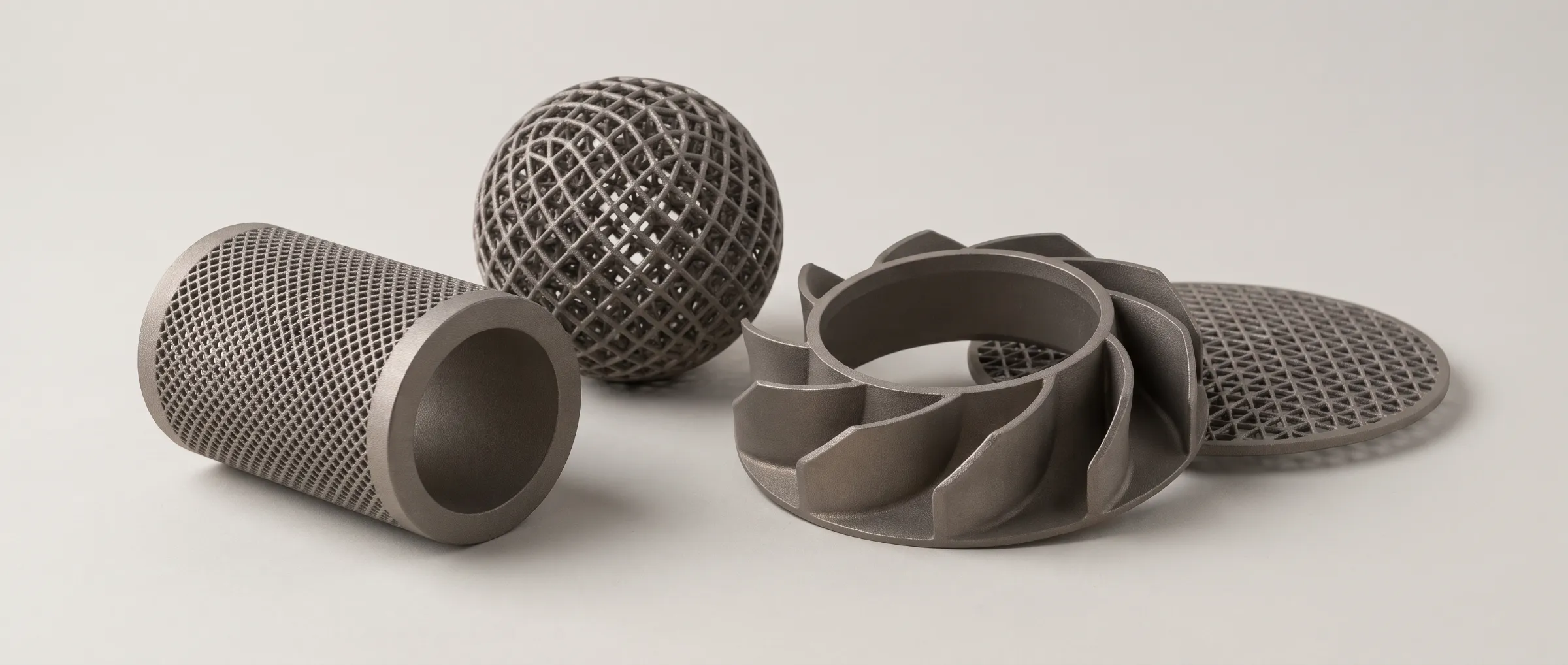
Very strong, lightweight metal parts made by laser powder bed fusion (SLM), from a single piece. Upload a CAD file and get price and delivery date in seconds.






Material properties.
Typical values after heat treatment (800 °C), measured to ISO 6892-1.
Datasheet (PDF)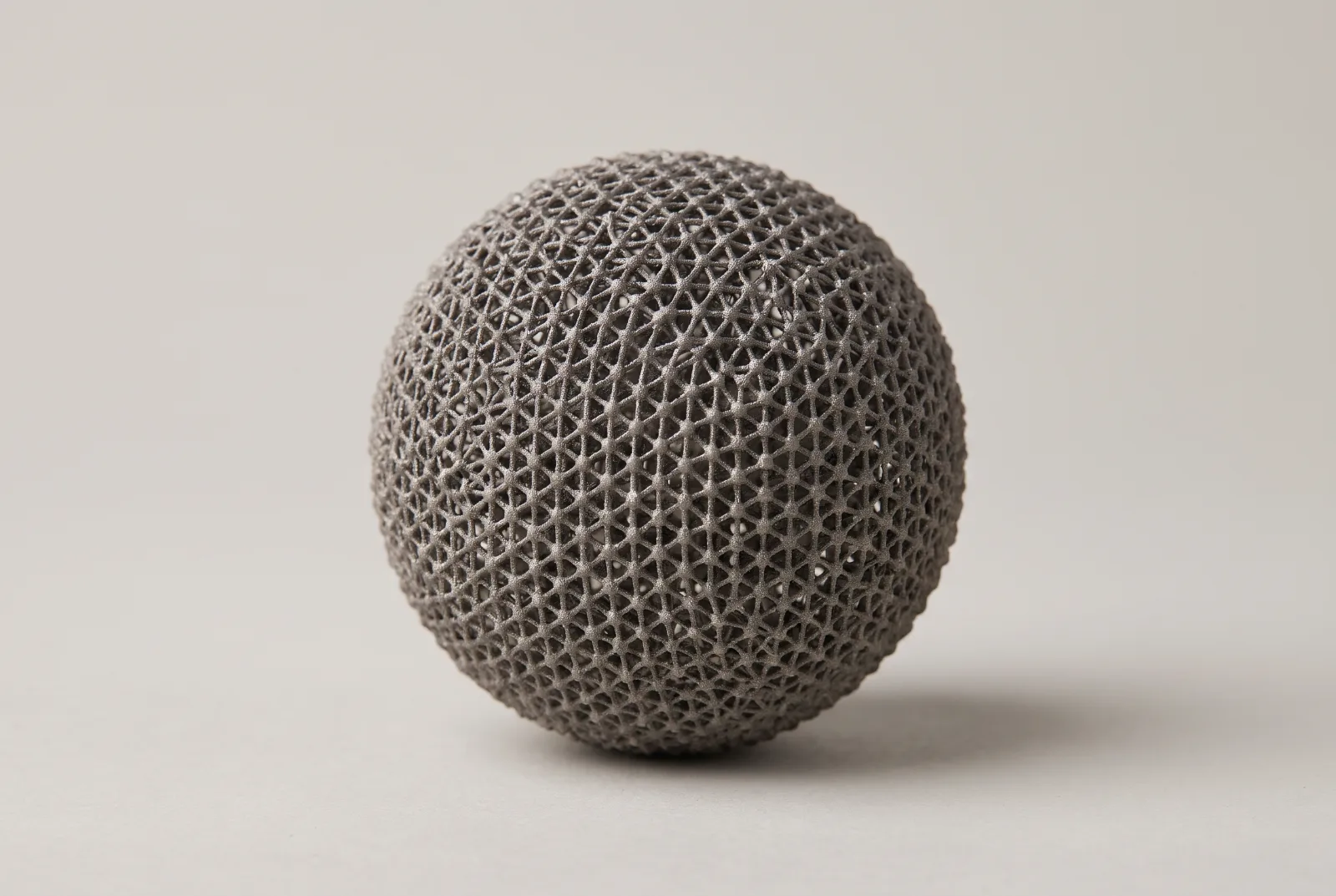
Material
Ti6Al4V (Grade 5), composition to ASTM F1472 and F2924Tensile strength
1055–1075 MPaYield strength
945–965 MPaElongation at break
13–14%Density
4.41 g/cm³Modulus of elasticity
110 GPaHardness
approx. 320 HV5Continuous service
up to approx. 350 °C
Applications for titanium.
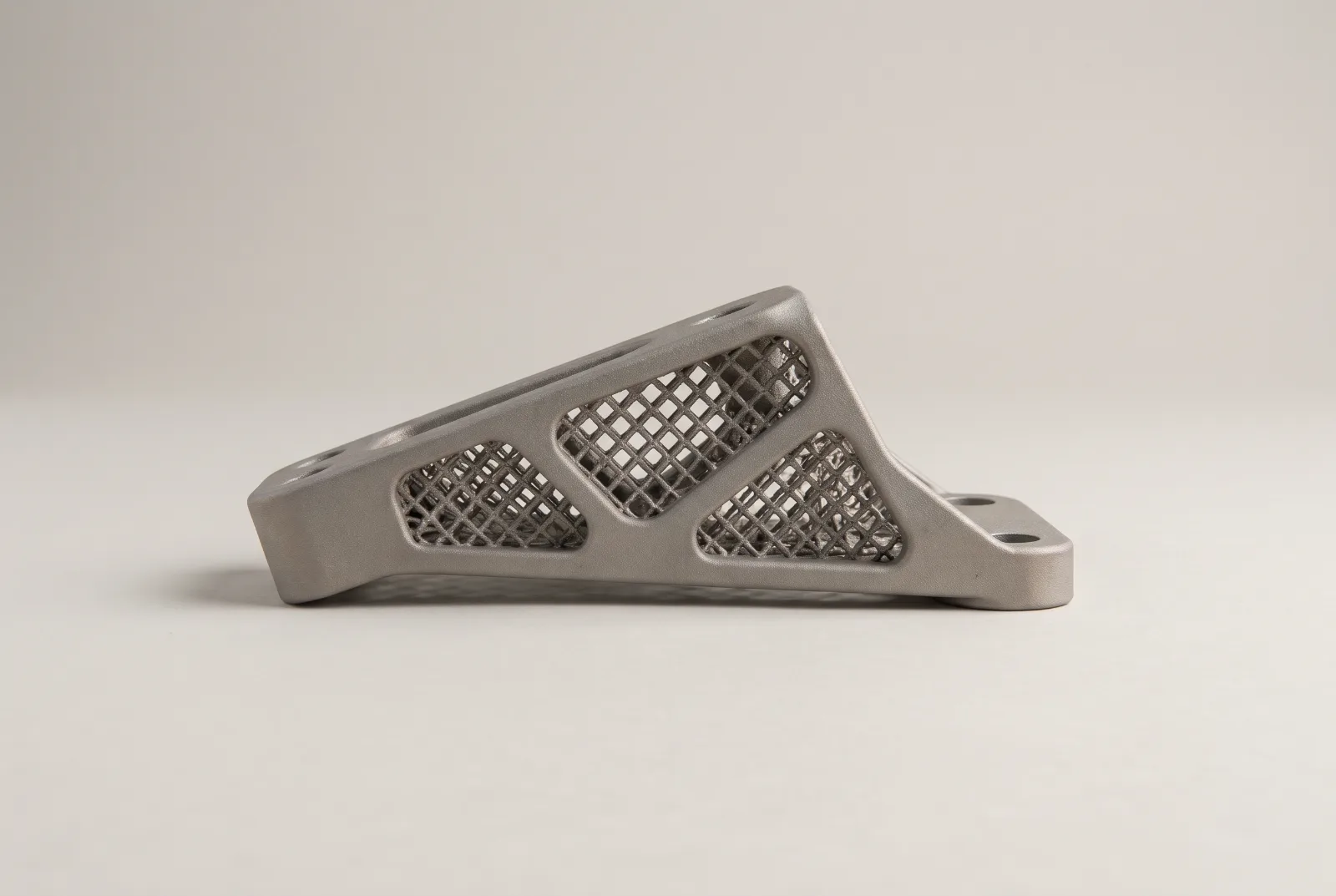
For parts that carry high loads and still have to be light.
Lightweight design under load
Brackets and structural parts for aviation, motorsport and robotics, where every gram counts.Lattice structures
Fine, high-strength lattices that save weight or absorb energy.Corrosive environment
Resistant to salt water and many chemicals, even under mechanical load.Elevated temperature
Withstands continuous service up to around 350 °C, where aluminium has long since given way.
When another process is a better fit.
Cost is the priority
Titanium is the most expensive metal in our range. Where aluminium is sufficient, it is considerably cheaper.Corrosion without high loads
For corrosion-resistant parts without lightweight requirements, stainless steel 316L is often sufficient.Simple geometry
Simple shapes are often cheaper when milled, even though titanium is difficult to machine.Large, solid parts
A large volume makes titanium very expensive. Design solid parts hollow, with a lattice or in a different material.
Design rules.
Follow these values and the part will fit on the first print.
Wall thickness
At least 0.4 mm for supported walls, 0.5 mm for unsupported walls.Holes
From 0.5 mm diameter. Through channels need an opening so that the powder can be removed.Details
Embossed and engraved details from 0.2 mm.Overhangs
Surfaces flatter than 45° need supports and are rougher on the underside. Steep surfaces stay smooth.Accuracy
±0.2 mm. Machine fits and sealing surfaces after printing.Layer and build volume
0.03 mm layer thickness, parts up to 350 × 400 × 360 mm.
Surface and post-processing.
As printed
Matt, dark grey surface, roughness Ra approx. 9–12 µm.Blasted
Uniformly matt, roughness Ra approx. 5–9 µm.Threads and fits
Titanium is difficult to machine. Threads and fitting surfaces on request.
Frequently asked questions.
- Usually within 7–10 working days of ordering, depending on size and post-processing. After upload, the online quoting tool shows the exact delivery date.
- The powder and the processing are more demanding. The price depends mainly on volume: hollow or lattice parts are considerably cheaper than solid ones. Upload your CAD file and the price appears in seconds.
- After heat treatment, over 1000 MPa tensile strength at a density of 4.41 g/cm³. That is more than twice the strength of printed aluminium, at around 1.6 times the density.
- STEP and STL. STEP is preferable because dimensions and holes are transferred exactly.
- Yes, threads are cut after printing. Specify them in your inquiry or write to us.
Price your titanium part.
Upload a CAD file and get price and delivery date in seconds. For series production and special requirements, send us an inquiry.